
When your cat or dog starts scratching nonstop, fleas may be the first thing that comes to mind. But fleas aren’t the only culprits. Ticks and mites can also cause severe irritation, skin problems, and diseases.
Knowing what’s actually bothering your pet makes a big difference when choosing the right treatment. This guide compares fleas, ticks, and mites in a clear, simple way so you can easily recognize, treat, and keep them from coming back.
Fleas vs. Ticks vs. Mites: Quick Comparison
Fleas, ticks, and mites are different parasites with a few things in common: they are tiny, tricky to spot, and they annoy pets and pet parents like it’s their full-time job.
Let’s compare these parasites in the table below, so you can better understand whether fleas, ticks, or mites are causing the problem.
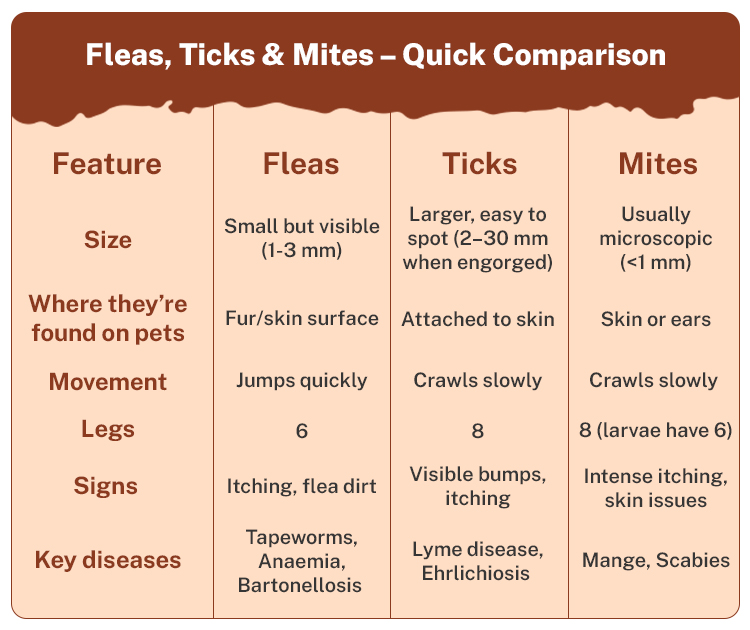
Now that you know the key differences, let’s understand each parasite in detail.
What are fleas and how to prevent them?
Fleas are small, fast-moving parasites that live on a pet’s skin and feed on blood. They’re experts at hiding in fur and jumping between animals. A single flea might not seem like a big deal, but fleas multiply fast. What starts as a minor issue can become a full infestation in a few days.
Common signs of flea infestations in pets are:
- Constant scratching
- Tiny black specks (flea dirt)
- Red, irritated skin
- Hair thinning or patchy loss
Fleas bite pets and humans to feed on the blood. Flea bites usually show up as general irritation rather than clear bumps on pets. On humans, bites often appear as small red clusters.
Major flea-borne diseases include:
- Flea allergy dermatitis
- Tapeworm infections
- Bartonellosis
- Rickettsial infections
- Anemia
- Hemoplasmosis
The good news is that fleas are preventable and treatable with the right flea treatments and care.
Best flea treatments for dogs:
NexGard Chewables, Simparica Chewables, Frontline Plus, Seresto Collar
Best flea treatments for cats:
Frontline Plus, Seresto Collar, Bravecto Spot-On, Credelio
What are ticks and how to prevent them?
Ticks are slow-moving parasites that attach themselves to a pet’s skin and feed on blood. Unlike fleas, they don’t jump but latch on and hide in the fur. They’re often picked up by pets during outdoor visits, especially in grassy areas, hiking trails, or wooded environments.
Common signs of tick infestations in pets are:
- Constant scratching
- Bumps or scabs
- Restlessness
- Head shaking
- Small bumps on the skin
Ticks not only cause itching and scratching but can also transmit a number of serious diseases in dogs and cats. They’re commonly found in moist and warm places on the pet’s body, such as in and around the ears, under the collar, between the legs, and around the tail.
Major tick-borne diseases include:
- Lyme disease
- Ehrlichiosis
- Anaplasmosis
- Rocky Mountain Spotted Fever
- Babesiosis
- Tick paralysis
Because of these health risks, tick prevention and treatment are essential to keep your pets safe and comfortable.
Best tick treatments for dogs:
NexGard Chewables, Simparica Chewables, Frontline Plus, Seresto Collar
Best tick treatments for cats:
Frontline Plus, Seresto Collar, Bravecto Spot-On, Credelio, NexGard Combo
What are mites and how to prevent them?
Mites are microscopic parasites, which means they can’t be seen with the naked eye. Although tiny, they can cause major skin problems. Different types of mites affect pets in different ways. These are the most common types of mites that affect pets:
- Ear mites: Live inside the ears and cause irritation.
- Sarcoptic mites: Cause mange (a very itchy and contagious condition).
- Demodex mites: Naturally present on pets’ skin but can overgrow.
Common signs of mite infestations in pets are:
- Intense, nonstop itching
- Crusty or scaly skin
- Hair loss in patches
- Dark debris inside ears
- Small bumps on the skin
Major mite-borne diseases include:
- Demodicosis
- Mite dermatitis
- Scabies
To protect your pet from these issues, it’s important to use reliable mite control treatments.
Best mite treatments for dogs:
Best mite treatments for cats:
Simple Tips to Tackle Fleas, Ticks and Mites in Pets
Parasites like fleas, ticks, and mites pose serious health risks for cats and dogs. Stopping them before they start multiplying is always easier than dealing with an outbreak. Follow these easy prevention tips to keep your pet safe from fleas, ticks, and mites:
- Use vet-recommended flea and tick preventatives.
- Wash your pet’s bedding regularly.
- Vacuum carpets and furniture frequently.
- Keep your pet’s coat clean and well-groomed.
- Avoid high-risk outdoor areas when possible.
- Check your pet for fleas and ticks daily.
Final Thoughts
Fleas, ticks, and mites may be small, but the discomfort and health risks they cause can be significant. Early detection, regular grooming, and year-round prevention are the best ways to protect your dog or cat. If your pet shows signs of infestation, speak with your veterinarian promptly for the right treatment plan.