
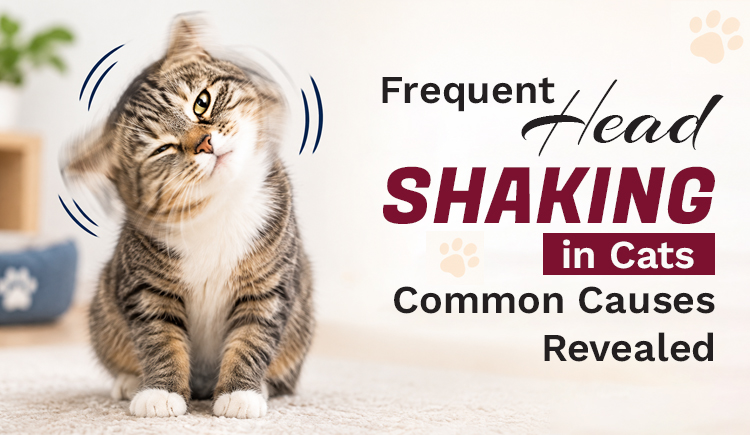
Our purring babies can’t speak for themselves and depend on body language and other subtle signs to communicate with us when they’re unwell. Therefore, as cat parents, it is crucial that we remain vigilant about all subtle signs to ensure their comfort and well-being. In this blog, we will particularly discuss frequent head shaking in cats and its possible reasons.
Let’s get started!
Potential Causes Behind Frequent Head Shaking in Cats
The following are some of the potential causes behind frequent head shaking in cats.
- Ear Infections
Though ear infections are not very common in cats, it is still a condition that you should be aware of. Ear infections in cats can be associated with yeast or bacterial overgrowth in the ears and trigger inflammation and thick discharge. Common symptoms of an ear infection in cats include intense itching and frequent head shaking.
- Ear Mites
Ear mites are tiny parasites that tend to infest cats’ ears and the surrounding fur. Cats that spend time outdoors tend to get infested with this parasite from the wildlife or other animals that they interact with. Ear mites can cause intense itching and discomfort, which may lead cats to shake their heads frequently in an attempt to relieve the irritation.
Ear mites in cats can be prevented with the administration of Revolution for Cats.
- Allergic Reactions
Some cats may develop allergies to environmental allergens such as pollen or dust or to certain food ingredients in their diet. Such allergic reactions can cause intense itchiness inside their ears, causing them to shake their heads in an attempt to relieve the irritation.
- Insertion of Foreign Objects
If a foreign object accidentally gets inside your cat’s ears, it can lead to a great amount of discomfort. In an attempt to relieve the discomfort or dislodge the object, your little kitty can shake its head vigorously.
- Neurological Conditions
Cats can develop neurological conditions that affect coordination and movement. Cerebellar hypoplasia, for example, is a developmental condition affecting the cerebellum. Also, if there’s any inflammation or irritation affecting structures around the ear can also cause unusual head movements.
- Ear Polyps
Ear polyps are non-cancerous growths of tissues that can develop in or around a cat’s ears caused by chronic inflammation or infections. The condition can cause irritation inside the ears and may lead to discharge. To comfort themselves, cats may shake their heads frequently.
- Behavioral Changes
Similar to us, even our purring babies tend to experience a range of emotions, including excitement, fear, and anxiety. One of the common symptoms of fear and anxiety in cats is persistent head shaking. However, there won’t be any discharge or inflammation in such conditions.
How to Manage Head Shaking in Cats?
Regular veterinary checkups can help identify and address health concerns that may contribute to head shaking in cats. The checkups help in timely diagnosis and treatment of any health concerns.
Also, ensuring an effective year-round parasite prevention plan can work well to protect your cat from infestations that can trigger head shaking.
It is also advised that you clean your cat’s ears regularly with cat-specific ear cleansers to eliminate dirt and debris that can lead to infections. Some of the most effective ear cleansers for cats are Epi-Otic Ear Cleaner and Oticlear Ear Cleanse.
Additionally, if you’re aware of allergens that may affect your kitty, it is best that you reduce their exposure.
Frequently Asked Questions
- How can I keep my cat’s ears healthy?
You can keep your cat’s ears healthy by inspecting them weekly and cleaning them gently using a vet-approved ear cleaner. Wipe the outer area of the ears carefully with a soft cloth or a damp cotton ball. However, never push cotton swabs or sharp objects deep into the ear canal.
- Are ear mites common in cats?
Ear mites can spread through close contact with infected animals and are more common in cats that regularly interact with other animals. The parasites tend to cause intense itching, frequent head shaking, and dark, crumbly debris in the ear canal.
- My cat is shaking her ear. Should I take her to a veterinarian?
You should seek veterinary advice if the head shaking is frequent, persistent, worsening, or is accompanied by scratching, discharge, unusual odor, pain, or redness.
Wrapping Up
Head shaking in cats can be symptoms of various underlying issues. Therefore, if your cat’s head shaking is frequent, persistent, or accompanied by other concerning signs, it is advised that you seek veterinary help as the vet will be able to identify the root cause behind the action and suggest appropriate treatments if necessary.
At BudgetPetWorld, we carry a wide range of ear-care products and many other essentials for cats. Explore our online store to purchase your preferred products from the comfort of your home.